- About the Program:
The Diploma program in Electrical Engineering focuses on the professional practice of designing, developing, and maintaining electrical and electronic systems. This field covers a wide range of applications, from large-scale power generation, transmission, and distribution networks to smaller systems such as automation, control systems, and renewable energy solutions. Through this program, students gain the knowledge and skills necessary to address real-world engineering challenges. Electrical engineers play a vital role in advancing modern technology, contributing to innovations such as smart grids and energy-efficient systems. The Diploma in Electrical Engineering is offered as a 3-year full-time program for students after Class 10 and a 2-year lateral entry program for ITI certificate holders or diploma holders in allied fields.
- Programme Educational Objectives:
PEO-1: To develop the ability to apply and update technical knowledge through a practical, skill-based curriculum that meets current industry and academic needs.
PEO-2: To build professional integrity and ethical values, with awareness of national and global standards, focusing on the social, safety, health, and environmental impacts of engineering work.
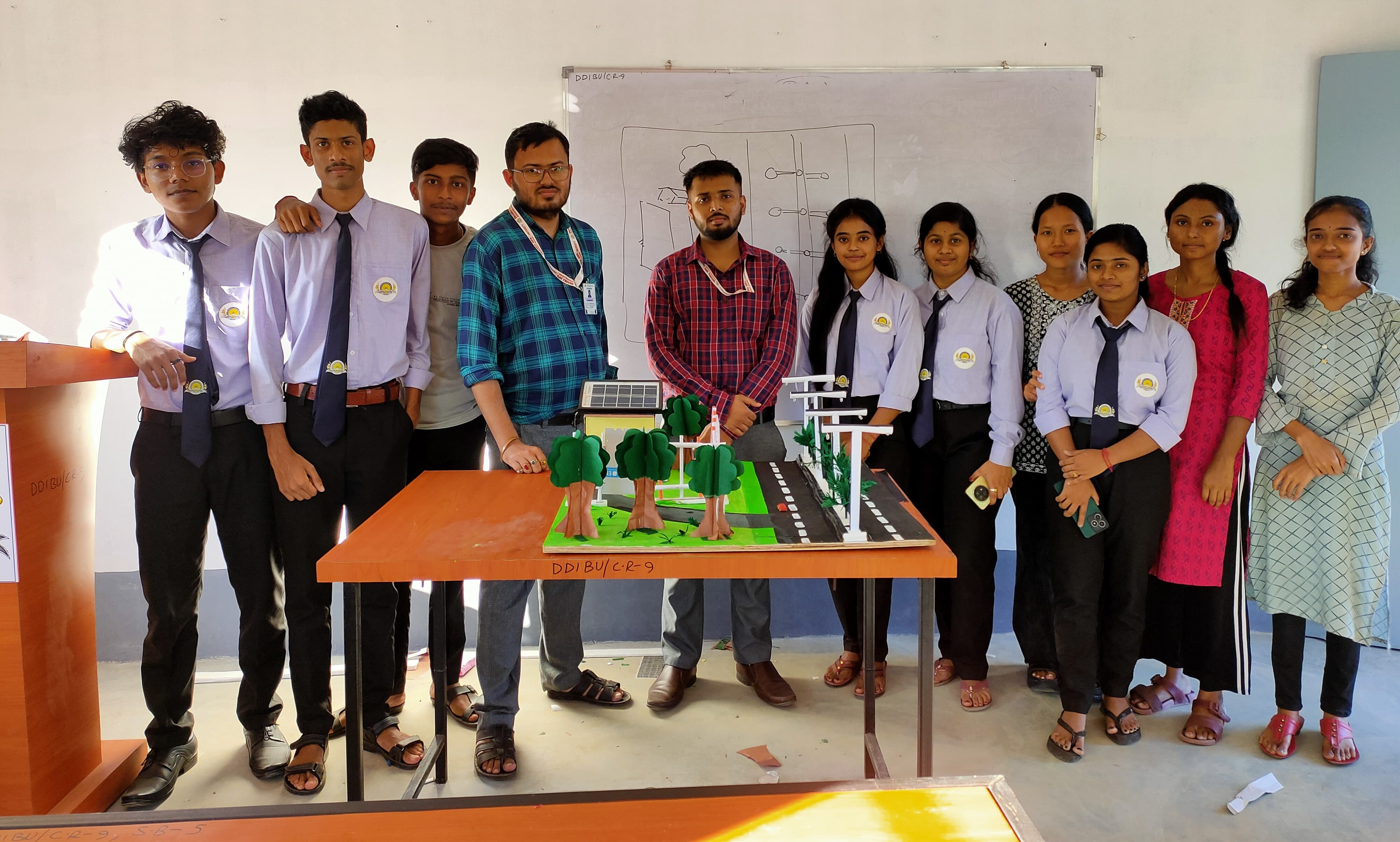
PEO-3: To encourage teamwork and problem-solving through hands-on, multidisciplinary projects and industry interaction, preparing students for real-world challenges.
- Program Outcomes:
PO1: Engineering Knowledge: Apply knowledge of mathematics, science, engineering fundamentals, and electrical engineering to solve complex engineering problems.
PO2: Problem Analysis: Identify, formulate, research literature, and analyze complex electrical engineering problems to reach substantiated conclusions.
PO3: Design and Development of Solutions: Design electrical systems, components, and processes to meet desired needs while considering safety, environmental, and societal constraints.
PO4: Investigation of Complex Problems: Use research-based knowledge and methodologies, including experiments, data analysis, and interpretation, to provide valid conclusions.
PO5: Modern Tool Usage: Apply appropriate techniques, resources, and modern engineering and IT tools for complex electrical engineering tasks, with an understanding of their limitations.
PO6: The Engineer and Society: Assess societal, health, safety, legal, and cultural issues relevant to electrical engineering practice and demonstrate knowledge of professional responsibilities.
PO7: Environment and Sustainability: Understand the impact of electrical engineering solutions in environmental and societal contexts and demonstrate the need for sustainable development.
PO8: Ethics: Apply ethical principles and commit to professional ethics and responsibilities in electrical engineering practice.
PO9: Individual and Team Work: Function effectively as an individual, as well as in diverse teams and multidisciplinary settings.
PO10: Communication: Communicate effectively on complex electrical engineering activities with engineers and society, including writing reports, making presentations, and giving clear instructions.
PO11: Project Management and Finance: Demonstrate knowledge of engineering and management principles to apply them in project management, team leadership, and financial decision-making in a multidisciplinary environment.
PO12: Life-long Learning: Recognize the need for and have the ability to engage in independent and life-long learning to keep pace with technological advancements in electrical engineering.
- Program Specific Outcomes :
PSO1: Practical Problem Solving: Identify and analyze basic electrical engineering problems using logical thinking and fundamental engineering principles to arrive at effective solutions.
PSO2: Technical Proficiency: Apply multidisciplinary knowledge and skills to design and maintain efficient, safe, and sustainable electrical systems that meet industry and societal needs.
PSO3: Industry and Career Readiness: Demonstrate readiness for global and industrial challenges by upgrading skills through certification courses, hands-on training, and industry collaboration.
- Program Highlights:
- Core Technical Foundations: Courses cover electrical circuits, electromagnetism, power systems, control systems, and digital signal processing.
- Hands-On Learning: Expect extensive lab work, real-world projects, and training in simulation tools to bridge theory and practice.
- Specializations: Many programs offer tracks like Power Electronics, Electrical Machine, Electrical Vehicles, Microgrid System, and Renewable Energy Systems.
- Industry-Relevant Skills: You'll learn to design, operate, and maintain electrical and electro-mechanical systems, including automation and control technologies.
- Career Preparation: Programs often include internships, industry collaborations, and soft skills training to prepare you for roles like Electrical Design Engineer, Control Systems Engineer, or Power Systems Engineer.
- Modern Applications: Exposure to green technologies, smart grids, and AI techniques in electrical systems is becoming increasingly common.
- Placement & Internship Info:
We strive to provide our students with job opportunities in various reputed companies, supporting their transition from academic life to professional careers. At the same time, we encourage them to pursue higher education based on their individual interests and skills, helping them make informed decisions about their future. To enhance their practical knowledge, we also motivate students to participate in internships. We suggest placements in well-known organizations such as ONGC, OTPC, TSECL, NEEPCO, airports, and substations. These hands-on experiences in real work environments play a vital role in developing their technical and professional skills.
- Career Prospects:
Electrical Engineering remains one of the most sought-after graduate programs in India due to its versatility, evolving technological advancements, and critical role in various industries. The program equips students with essential knowledge and skills, preparing them for a successful and dynamic career. Some of the career opportunities for Electrical Engineering graduates include: Power Systems Engineer, Electrical Design Engineer, Control Systems Engineer, Renewable Energy Engineer, Automation Engineer, Embedded Systems Engineer and Electrical Maintenance Engineer.